
Guide
How Due Date Is Calculated From Your Last Period (LMP Explained)
A due date is usually estimated from the first day of your last menstrual period, not from the day of conception. This guide explains why LMP is used, how the estimate works, and why ultrasound may still adjust the date.
In this guide
⚡Quick Answer
- ✦A due date is usually estimated from the first day of your last menstrual period, also called LMP.
- ✦Pregnancy is commonly counted as about 40 weeks from LMP, even though conception usually happens later.
- ✦The due date is an estimate, not a promise that birth will happen on that exact day.
- ✦A Due Date Calculator can help estimate timing, and an early ultrasound may sometimes refine it.
What LMP actually means
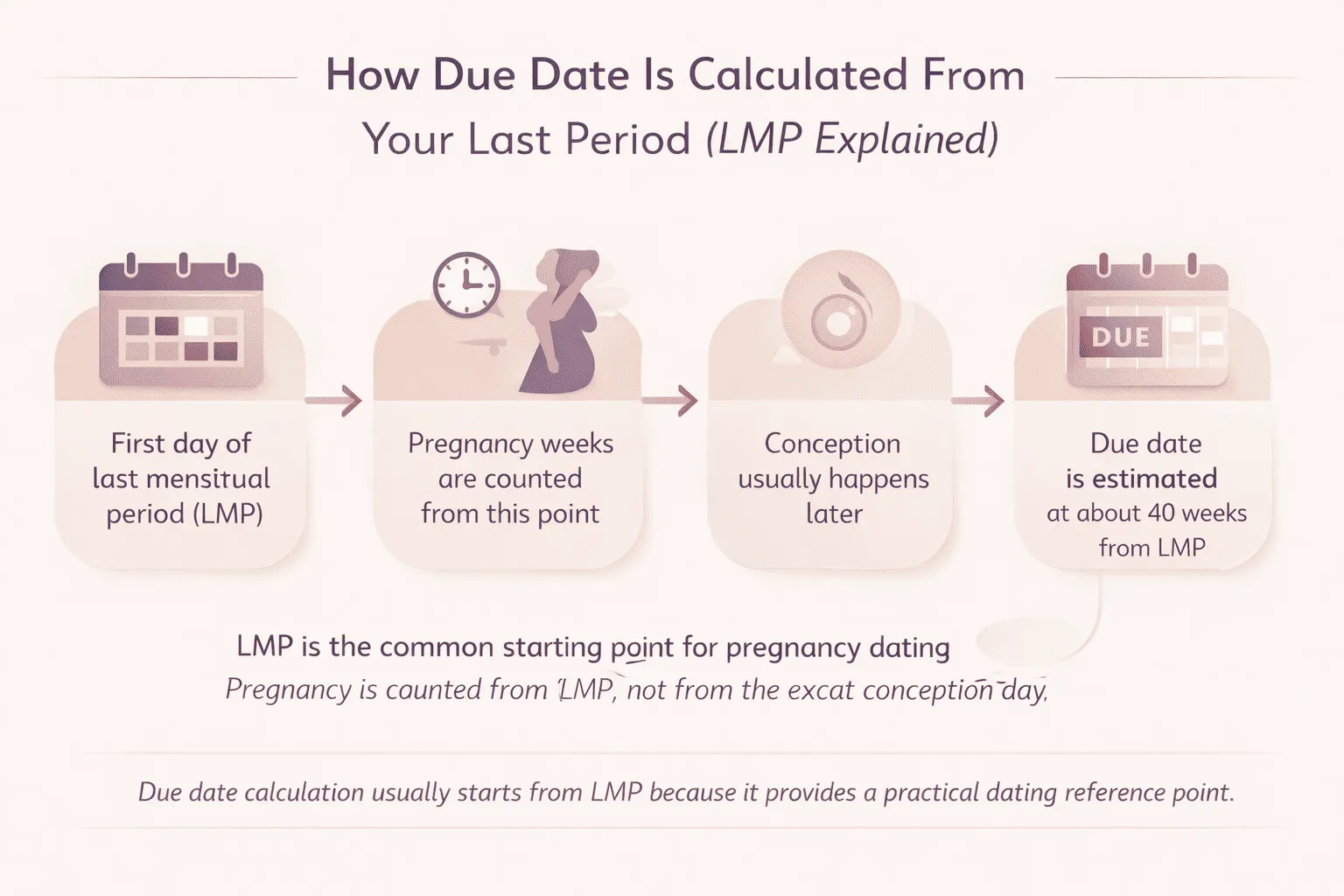
LMP stands for last menstrual period. In pregnancy dating, it means the first day of the last period before pregnancy. That date is commonly used as the starting point for estimating gestational age and the due date.
This can feel odd because you were not actually pregnant on that day. But the first day of the last period is often easier to identify than the exact day of conception, which is why it is used so often in routine pregnancy dating.
The first day of the last period is often more knowable than the exact conception date.
Pregnancy weeks are usually counted from LMP for consistency in care and tracking.
The date is useful, but it does not guarantee that birth will happen on the predicted day.
“If pregnancy is counted from LMP, I must already have been pregnant during my period.”
No. LMP is used as a practical dating starting point, even though conception usually happens later in the cycle.
How the due date estimate usually works
The usual idea is simple: start from the first day of the last menstrual period and count forward to an estimated due date. In standard pregnancy dating, that works out to about 40 weeks from LMP.
That does not mean conception happened 40 weeks earlier. It means pregnancy is dated from a cycle-based starting point that includes the time before ovulation and conception.
Why pregnancy is counted before conception actually happened
This is one of the biggest points of confusion. In many cycles, conception happens roughly around the middle of the cycle, not on the first day of the last period. But pregnancy weeks are still counted from LMP because that date is more practical for routine dating.
That is why someone can be described as a few weeks pregnant even though actual conception happened later than the number seems to suggest.
What usually shapes the estimate
Want to estimate your due date from LMP?
Use the first day of your last period as the starting point, then compare that estimate with later pregnancy dating if needed.
Why cycle length can affect the estimate
LMP-based dating often assumes a familiar cycle pattern, but real cycles are not always the same length. If your cycle is shorter or longer than the classic 28-day example, that can make the simple LMP estimate less exact.
This does not make the estimate useless. It simply means the due date may later be refined if other information gives a clearer picture.
Why an ultrasound may change the due date
An early ultrasound can sometimes suggest that the pregnancy is measuring differently from what the LMP date implied. When that happens, healthcare professionals may adjust the due date so that the pregnancy timeline better matches the scan-based estimate.
This is one reason a due date can change slightly after early pregnancy care begins. A change does not necessarily mean anything is wrong — it often just means the estimate is being refined.
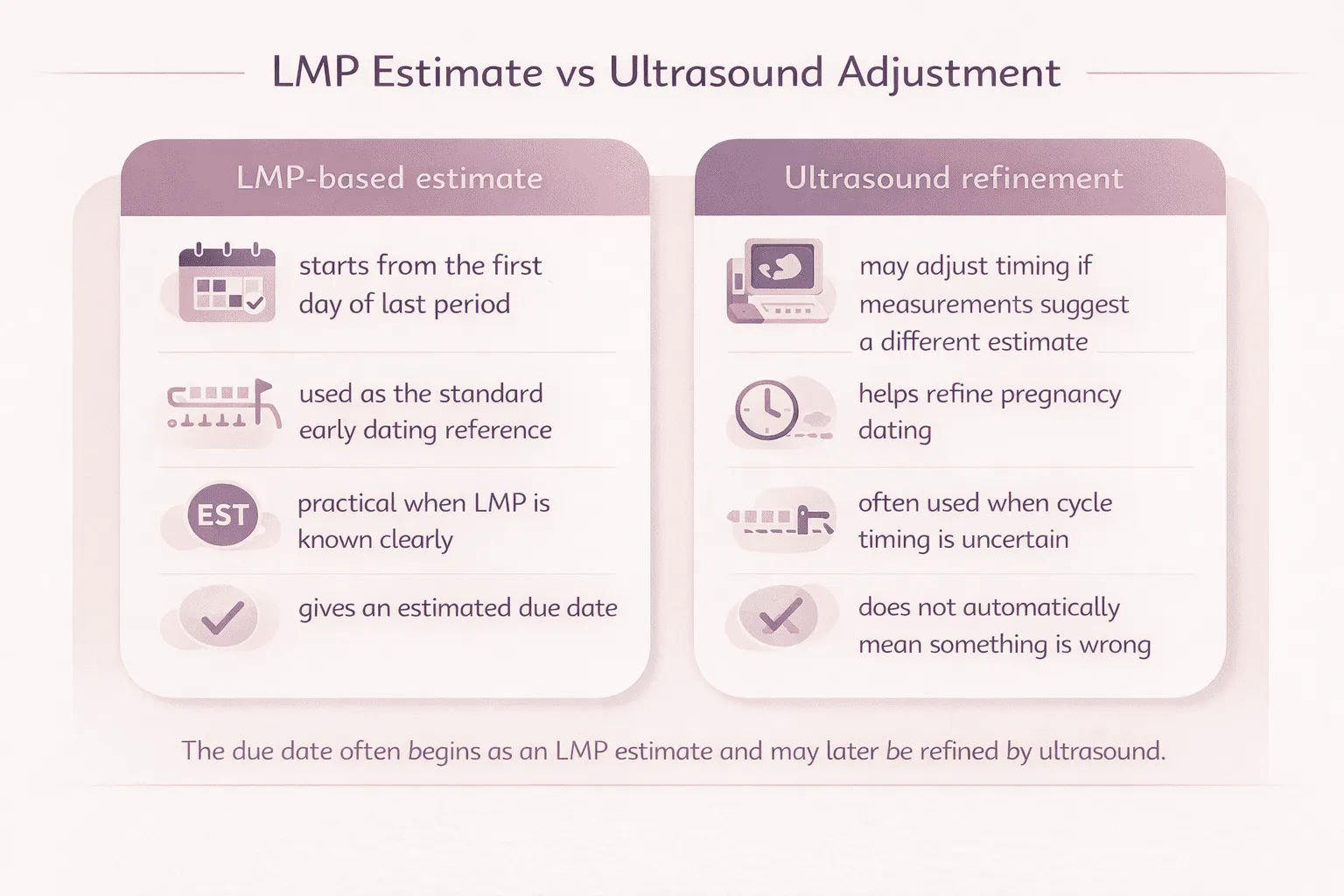
LMP-based estimate
Uses the first day of the last period as the starting point for pregnancy dating.
Ultrasound refinement
May adjust the expected date if scan measurements suggest different timing.
In simple terms, the due date starts as a useful estimate from LMP, and sometimes gets refined later if ultrasound dating gives a clearer fit.
How to use your due date realistically
Treat it as a guide
A due date is useful for planning and care, but it is still an estimate.
Use accurate dates if you know them
The more accurate your LMP date is, the more useful the first estimate becomes.
Expect possible refinement
An ultrasound may adjust the estimate without that being unusual.
Understand the counting method
Pregnancy weeks are counted from LMP for dating consistency, not because conception happened then.
✦ Bottom line
A due date is usually calculated from the first day of your last menstrual period because that date is often easier to identify than the exact day of conception. It is a useful estimate for pregnancy dating, but it may be refined later by ultrasound.
Estimate your timing from LMP with our Due Date Calculator.
Helpful next steps
Go deeper depending on whether you want a quick estimate, week-by-week dating, or a clearer explanation of why the date can change.
Estimate your expected due date from the first day of your last period.
See how pregnancy weeks are counted from LMP.
Learn why ultrasound or timing details can adjust your estimate.
Frequently asked questions
These quick answers cover the most common questions people have when they first see a due date based on LMP and want to understand why it is calculated that way.
1How is a due date calculated from the last menstrual period?+
A due date is usually estimated from the first day of the last menstrual period, often called LMP. Pregnancy is then counted forward as about 40 weeks from that starting point.
2Why is pregnancy counted from LMP instead of conception?+
Because the exact day of conception is often harder to know with confidence, while the first day of the last period is usually easier to identify. That is why LMP is commonly used as the starting point for pregnancy dating.
3Is the due date exact?+
No. A due date is an estimate, not a guarantee. It helps guide pregnancy timing and care, but babies do not all arrive on the exact predicted day.
4What if my cycles are not exactly 28 days?+
Cycle length can affect how well an LMP-based estimate reflects your actual timing. That is one reason healthcare professionals may also use ultrasound to confirm or adjust dating.
5Can an ultrasound change the due date?+
Yes. An early ultrasound may sometimes adjust the due date if it suggests the pregnancy is measuring differently from the date estimated by LMP.
6Does LMP mean I was already pregnant during my period?+
No. Pregnancy is counted from the first day of the last period for dating purposes, even though conception usually happens later in the cycle.
Editorial referencesSources and medical references
This guide is for educational use and should not replace personal medical advice.
+
Sources and medical references
This guide is for educational use and should not replace personal medical advice.
Due dates are useful planning estimates. They are commonly based on LMP first and may later be refined by ultrasound.
Try a related tool
Start with the Period Calculator, browse the Tools Hub, or explore the Guides Hub.