
Guide
Why Your Due Date May Change
A due date can feel like a fixed answer, so it can be surprising when it changes. In most cases, a changed due date does not mean something is wrong. It usually means the estimate has been refined using better dating information, especially from an early ultrasound.
In this guide
⚡Quick Answer
- ✦A due date can change because it is an estimate, not an exact answer.
- ✦The most common reason for a change is that an early ultrasound provides a better dating estimate.
- ✦A changed due date does not usually mean something is wrong.
- ✦Once the best estimated due date is chosen, it usually is not meant to keep changing with every later scan.
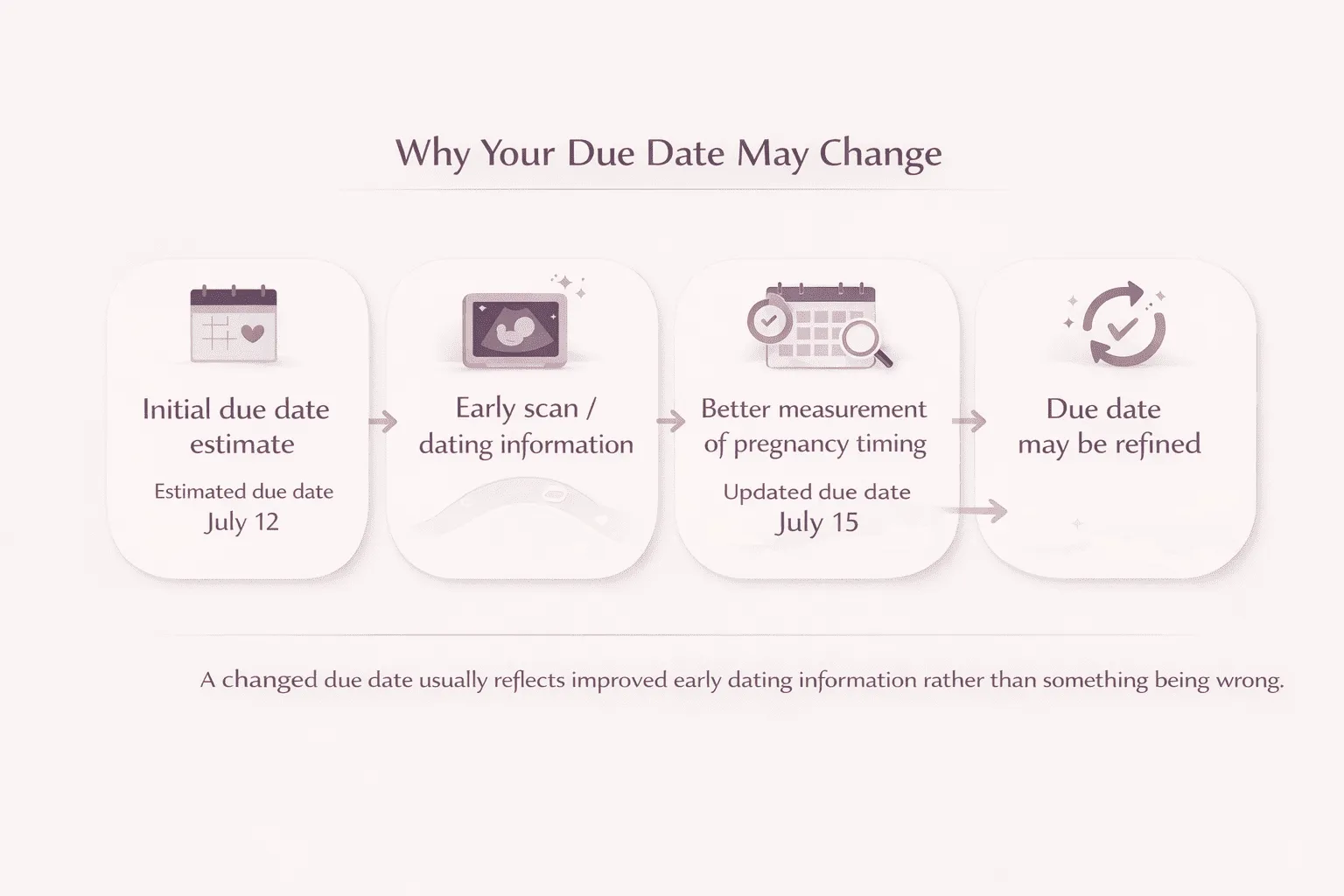
Why a due date is never a perfect prediction
A due date is meant to estimate when a pregnancy reaches about 40 weeks, not to predict the exact day birth will happen. Many babies arrive before or after that date, which is one reason the due date should always be understood as a guide rather than a promise.
That also means that if the estimate changes early in pregnancy, the change is usually about improving the dating — not about something going wrong.
A due date helps guide pregnancy timing, but birth does not need to happen on that exact day.
Early scans can improve how accurately the pregnancy is dated.
A changed due date often reflects better information, not a problem.
“If my due date changes, something must be wrong with the pregnancy.”
A due date change usually means the estimate has been refined using better early dating information, especially ultrasound.
Why LMP and ultrasound can give different dates
The first due-date estimate is often based on the first day of the last menstrual period. That works well when the date is known clearly and cycle timing is fairly typical. But if the last period date is uncertain, ovulation happened earlier or later than expected, or the cycle length was not close to the usual assumption, the LMP estimate may not be the best fit.
In those situations, an early ultrasound may provide a more reliable dating estimate because it measures how far along the pregnancy appears to be.
Why early ultrasound matters so much
Early ultrasound is especially useful for pregnancy dating because it can help confirm whether the estimated timeline fits what is seen on the scan.
If the scan-based estimate differs enough from the date-based estimate, the due date may be adjusted to better match the scan.
Common reasons a due date may be revised
Want to understand the original estimate before any revision?
Start with how LMP-based due dating works, then compare that with why ultrasound may refine the timeline.
Why a changed due date usually is not alarming
A changed due date can feel emotionally significant because people often attach strongly to the first date they are given. But in most cases, the change is simply a refinement. It is the healthcare team choosing the estimate that best matches the information available.
That is very different from saying the pregnancy itself has suddenly changed in a dangerous way. Usually, the timeline is just being clarified.
Why the date usually should not keep changing later
Once the best estimated due date has been selected using early pregnancy information, it is generally meant to stay the same. Later scans are often more useful for checking growth and development than for repeatedly redating the pregnancy.
That is why one early change can make sense, while frequent later changes to the due date would usually not be the normal approach.
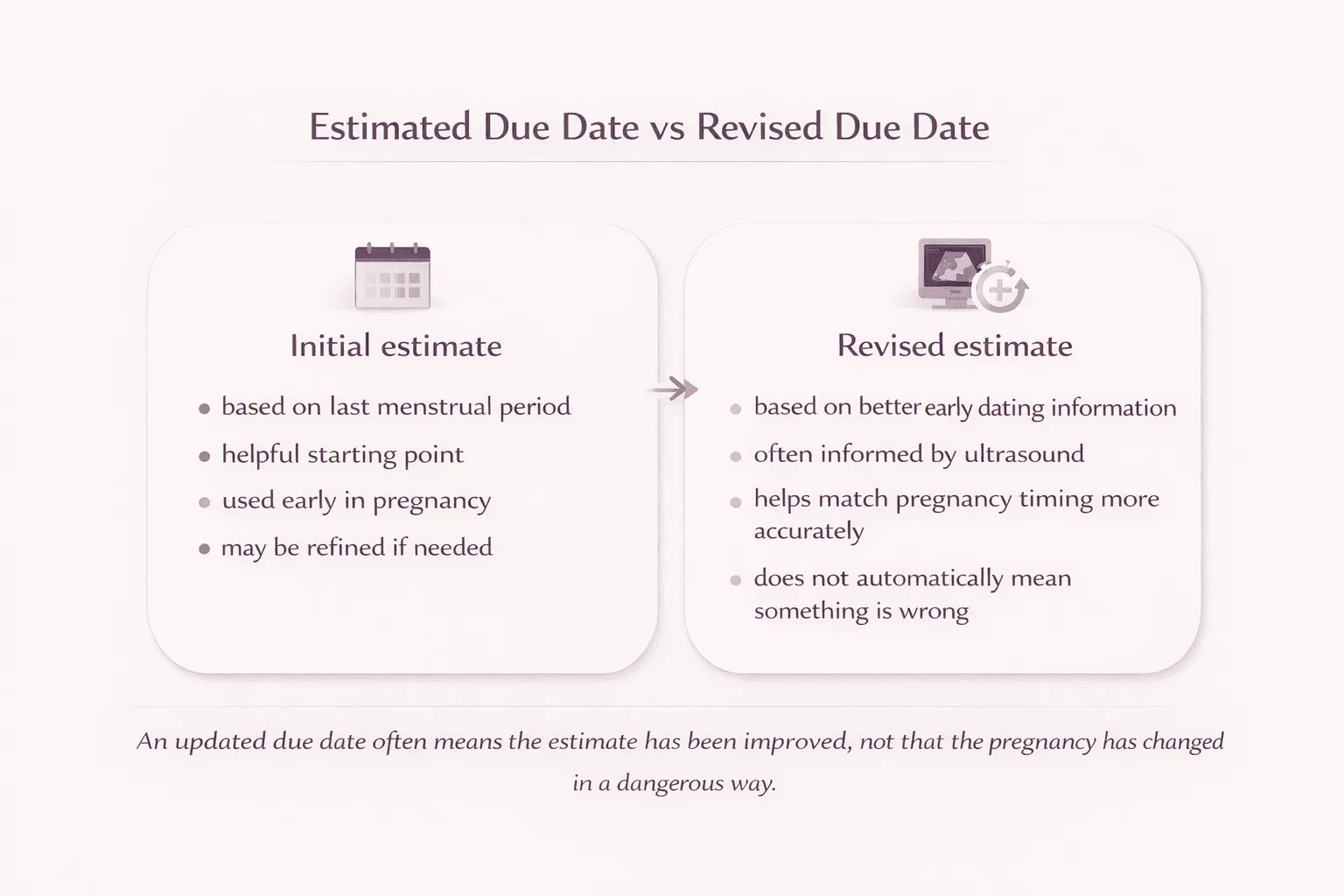
Initial estimate
Often based on the first day of the last period and early date information.
Revised estimate
May be chosen if early ultrasound suggests a better fit for pregnancy dating.
In simple terms, a due date may change because the goal is to use the most accurate early dating estimate — not because the pregnancy itself is suddenly behaving unusually.
How to use a changed due date realistically
See it as refinement
A revised date usually means the estimate has improved, not that something is wrong.
Ask which date is being used
It helps to know which due date your care team is using for appointments and planning.
Expect some flexibility
Babies commonly arrive before or after the due date anyway.
Keep the bigger picture in mind
The due date supports pregnancy care, but it is still only one part of the overall clinical picture.
A revised date usually means better dating, not bad news
The purpose of a due date change is usually to make the pregnancy timeline fit the best early information available.
✦ Bottom line
A changed due date usually reflects better early dating information, especially from ultrasound, rather than a problem by itself. The goal is to choose the estimate that best fits the pregnancy timeline, not to chase a perfect prediction.
Explore the first estimate with our Due Date Calculator.
Helpful next steps
Use the right next step depending on whether you want the original estimate, week-based dating, or the LMP explanation behind the first due date.
Estimate your due date from the first day of the last period.
See how the pregnancy timeline is counted from LMP.
Understand the first estimate before any revision happens.
Frequently asked questions
These quick answers cover the most common questions people have when they are told their due date has changed.
1Why can a due date change during pregnancy?+
A due date can change because the first estimate is only a starting point. Later information, especially an early ultrasound, may suggest a more accurate dating estimate.
2Does a changed due date mean something is wrong?+
Not usually. A changed due date often just means the estimate has been refined to better match scan measurements or more reliable dating information.
3Can ultrasound change the due date?+
Yes. Early ultrasound can sometimes revise the estimated due date if the scan-based dating looks different from the date estimated from the last menstrual period.
4Why might LMP and ultrasound give different dates?+
They can differ if the last period date is uncertain, if ovulation happened earlier or later than expected, or if the cycle length did not match the standard assumption used in simple LMP dating.
5Will my due date keep changing after every scan?+
Usually no. Once the best estimated due date has been chosen using early dating information, it is generally not meant to keep changing with every later scan.
6Does the due date predict the exact day birth will happen?+
No. A due date is an estimate of when the pregnancy reaches about 40 weeks. Many babies are born before or after that day.
Editorial referencesSources and medical references
This guide is for educational use and should not replace personal medical advice. These references support general due-date revision and pregnancy-dating guidance.
+
Sources and medical references
This guide is for educational use and should not replace personal medical advice. These references support general due-date revision and pregnancy-dating guidance.
A changed due date usually reflects better early dating information, especially from ultrasound, rather than a problem by itself.
Try a related tool
Start with the Period Calculator, browse the Tools Hub, or explore the Guides Hub.