
Guide
What Is a Normal Menstrual Cycle Length?
A normal menstrual cycle is not always exactly 28 days. This guide explains what cycle length means, what range is commonly considered normal, and when timing changes deserve more attention.
In this guide
⚡Quick Answer
- ✦A normal menstrual cycle length does not have to be exactly 28 days.
- ✦What matters more is whether your cycle falls within a common range and follows a pattern that is reasonably consistent for you.
- ✦Small month-to-month shifts can still be normal.
- ✦A Cycle Length Calculator can help you understand your usual timing more clearly.
What cycle length actually means
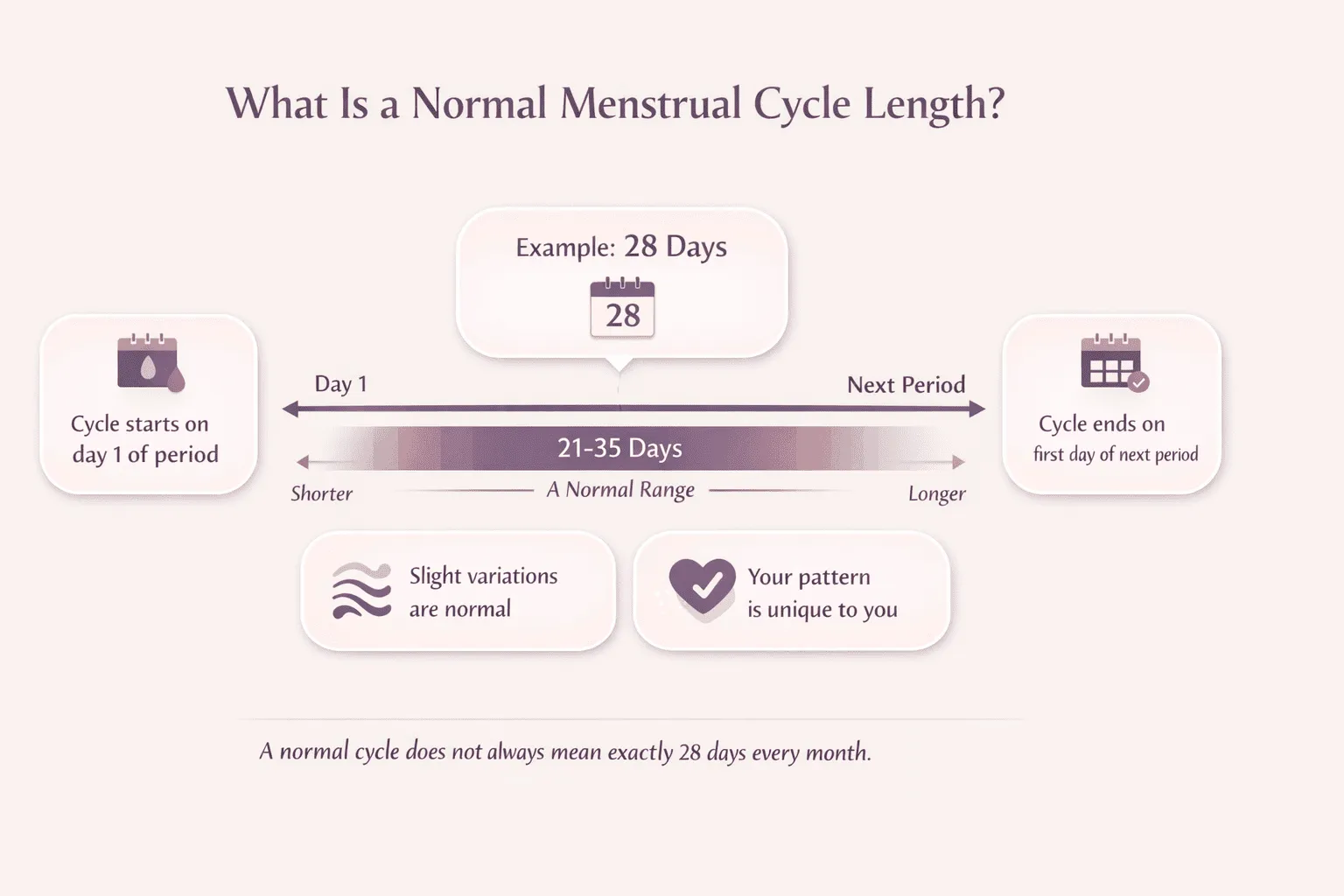
Cycle length means the number of days from the first day of one period to the first day of the next period. It does not mean how many days bleeding lasts. That distinction matters because many people confuse cycle length with period length.
Once you understand that, it becomes easier to see why a cycle can be normal even if the date shifts a little from month to month.
Days from the first day of one period to the first day of the next period.
A 28-day cycle is only one common example, not the only normal pattern.
A fairly consistent personal rhythm often matters more than matching one exact textbook number.
“A normal cycle must always be exactly 28 days.”
A 28-day cycle is only one common example. Many healthy cycles are shorter or longer and still normal for that person.
Why 28 days is only one example
The 28-day cycle gets repeated so often that many people assume anything else is abnormal. But that number is better understood as a teaching example than a universal rule. Real cycles can be shorter or longer and still be completely normal for the person experiencing them.
This is why comparing yourself too strictly against one fixed cycle length can create confusion or unnecessary worry.
What “normal” usually means in real life
In real life, normal often means your cycle falls within a common healthy range and behaves in a way that is reasonably predictable for you over time. It does not have to land on the exact same date every month.
A cycle can still be normal if it shifts by a few days sometimes, especially when life has included stress, travel, sleep disruption, illness, or other routine changes.
What often matters most
Why your cycle may change slightly from month to month
Many cycle shifts are not dramatic. A period may arrive a little earlier one month and a little later the next without that meaning anything serious. Everyday factors like stress, travel, poor sleep, illness, weight change, and exercise changes can all influence timing.
That is why “normal” should leave room for some variation rather than demanding perfect repetition.
Want to understand your usual cycle timing more clearly?
Use real period start dates to measure your cycle pattern instead of relying on assumptions or memory.
When changes may deserve more attention
A cycle deserves closer attention when the timing becomes much harder to predict than usual, when the gap between periods starts changing more dramatically, or when the change comes with severe pain, very heavy bleeding, dizziness, or other unusual symptoms.
In other words, one small shift is different from a broader pattern change.
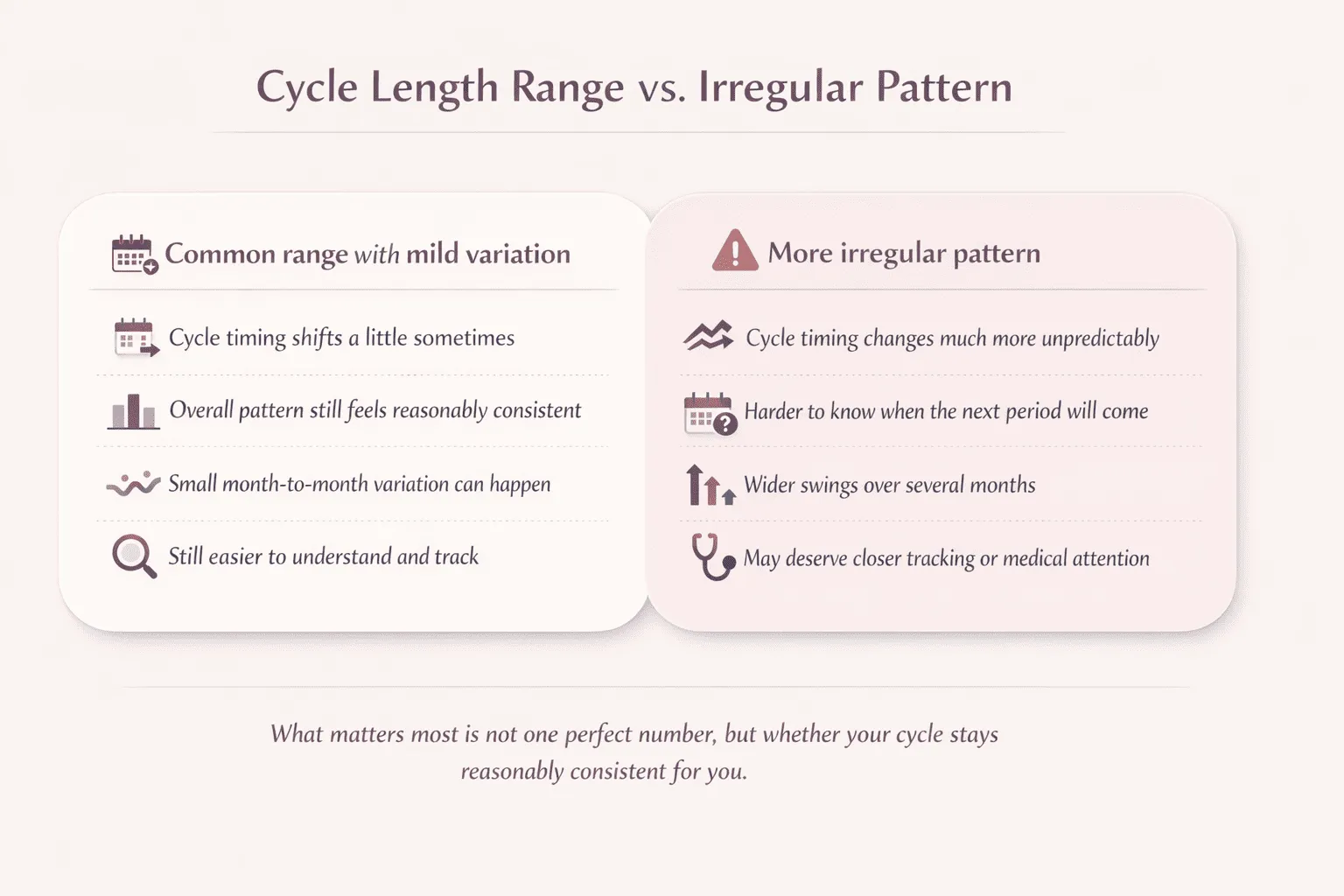
Common range with mild variation
Timing shifts a little sometimes, but the overall pattern still feels reasonably consistent.
More irregular pattern
Timing changes much more unpredictably and starts to feel harder to understand or track.
In simple terms, a normal cycle is not about matching one perfect number. It is more about whether your cycle behaves within a common range and stays reasonably consistent for you.
How to understand your own cycle more clearly
Track first-day dates
Real period start dates are much more useful than rough memory.
Look across several months
A pattern is easier to understand when you zoom out instead of judging one cycle alone.
Separate cycle from bleeding length
These are related but different measurements, and mixing them up creates confusion.
Watch for pattern shifts
Sudden ongoing unpredictability matters more than one mildly different month.
Normal does not mean identical every month
What matters more is your overall pattern and whether the cycle stays reasonably consistent for you over time.
✦ Bottom line
A normal menstrual cycle does not have to be exactly 28 days or perfectly identical every month. What matters more is whether your cycle falls within a common range and stays reasonably consistent for you over time.
Measure your usual timing more clearly with our Cycle Length Calculator.
Helpful next steps
Use the right next step depending on whether you want to measure cycle timing, predict the next period, or understand the difference between related cycle terms.
Calculate your cycle length more clearly from real dates.
Estimate your next period using your cycle pattern.
See how cycle length fits into the bigger month-by-month rhythm instead of looking at one number alone.
Frequently asked questions
These quick answers cover the most common questions people have when trying to understand whether their cycle length is still within a normal pattern.
1What is considered a normal menstrual cycle length?+
A menstrual cycle is often considered normal when it falls within a common healthy range and follows a pattern that is fairly consistent for you. Normal does not always mean exactly the same number of days every month.
2Is a 28-day cycle the only normal cycle?+
No. A 28-day cycle is only one common example. Many healthy cycles are shorter or longer than 28 days and are still normal for that person.
3Can menstrual cycle length change from month to month?+
Yes. Small timing shifts can happen from month to month. A cycle does not need to land on the exact same day every month to be considered normal.
4What is the difference between cycle length and period length?+
Cycle length is the number of days from the first day of one period to the first day of the next. Period length is how many days the bleeding itself lasts.
5When should I pay more attention to cycle changes?+
It is worth paying more attention when the timing becomes much less predictable than usual, when cycles are consistently very far apart or unusually close together, or when changes come with severe pain, very heavy bleeding, or other unusual symptoms.
6Can a calculator help me understand my normal cycle length?+
Yes. A Period Calculator or Cycle Length Calculator can help you track dates and notice your usual pattern over time, especially when you use real period start dates consistently.
Editorial referencesSources and medical references
This guide is for educational use and should not replace personal medical advice.
+
Sources and medical references
This guide is for educational use and should not replace personal medical advice.
A normal cycle does not need to be perfectly identical every month. What matters more is your overall pattern and whether it stays reasonably consistent for you.
Try a related tool
Start with the Period Calculator, browse the Tools Hub, or explore the Guides Hub.